Moths: Art Nouveau Embroidery Review for Craft Fair Sellers
First Impressions: Elegant, Artistic, and Instantly Premium
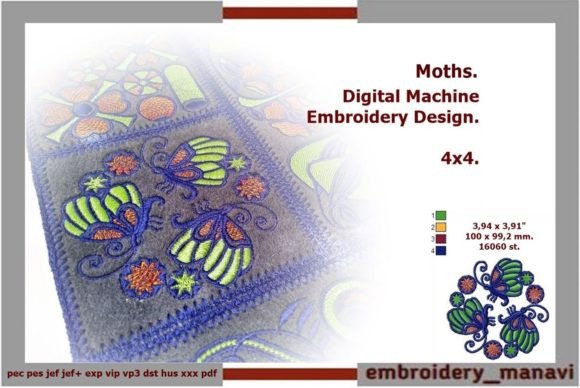
When I opened the Moths design file for the first time, I immediately saw a piece that would stop a shopper mid-stride at a busy weekend market. The Art Nouveau influence is unmistakable—flowing lines, organic wing shapes, and that delicate, almost jewelled detailing that makes the moths feel like heirloom accents rather than simple insect motifs. This is not a rustic farmhouse bug or a quirky cartoon. Moths carries a quiet, sophisticated confidence. It reads as decorative, slightly vintage, and absolutely premium, making it a standout choice for handmade sellers who want to position their craft fair product above the sea of generic floral or monogram items.
From a designer’s perspective, the stylized approach works brilliantly for machine embroidery design because it balances visual impact with stitchability. There’s a clear rhythmic repeat in the wings that suggests the file was built with good stitch flow in mind. The first impression is that this would look right at home on a linen pillow, framed in a wooden hoop, or stitched prominently on a structured tote. It’s a design that whispers “artisan” and “thoughtful,” which is exactly the kind of energy that pulls buyers into a booth.
Where Moths Truly Shines in a Craft Fair Booth
I think about booth layout constantly—what catches the eye from six feet away, what invites a closer look, and what makes someone pick up a finished product and not want to put it down. Moths has the rare ability to serve as both a focal point and a conversation starter. Its Art Nouveau styling feels nostalgic yet fresh, and it appeals to a wide range of customers: nature lovers, boho decor enthusiasts, vintage art collectors, and anyone who appreciates a touch of moody elegance. I can already picture a display wall of small stretched canvases or hooped fabric art, each featuring a different moth in a rich, contrasting thread color.
Because the design is explicitly described as an In The Hoop embroidery project, it’s ready to become a standalone decorative piece—think mug rugs, small wall hangings, or even layered patches. That versatility is pure gold for an Etsy seller or small shop product maker who needs to show variety without purchasing dozens of separate files. You can stitch the moths onto a pocket, turn them into a framed hoop art, or let them flutter across a set of tea towels. The design’s repeatable nature also means you can batch out a cohesive collection efficiently, which is critical when you’re prepping for a market with limited time.
Tote Bags and Pillow Covers: The Ultimate Canvas
For a tote bag design, Moths is exceptional. A large, flat panel of sturdy canvas or cotton-linen gives the full stitch detail room to breathe. I recommend hooping with a sharp needle and using a medium-weight cutaway stabilizer to support the dense areas—those wing patterns will have a fair amount of stitching, and a tote needs to handle daily wear. On a natural or off-white fabric, a deep charcoal, olive, or even a muted metallic thread transforms the moth into a piece of wearable art. For pillow covers, the design becomes a luxury detail. Imagine a pair of cushions with a single moth centered on each, or a bold arrangement on a floor pillow. The Art Nouveau lines feel instantly intentional and elevate the whole room setting, which is exactly the story you want to tell at a handmade market.
Aprons and Tea Towels: A Delicate Application
Apron embroidery with Moths works beautifully on the bib or pocket area, but I’d strongly caution against placing it on heavily textured or waffle-weave fabric. Tea towel embroidery, especially on smooth cotton or linen-cotton blends, allows the design to shine, but on a thick, looped terry towel, the fine details of the wings may sink and lose definition. If you’re set on using Moths for kitchen textiles, test on a sample first. For tea towels, a single moth placed near the hem or in a corner feels curated and sophisticated. I’d lean toward a subtle thread palette—soft slate, dusty rose, or antique gold—to keep the look refined rather than loud. For an apron, consider stitching the moth on a separate fabric patch and then appliquéing it onto the apron body; this gives you a clean, crisp finish every time and avoids the frustration of hooping a fully constructed garment.
Small Accessories: Patches and Pouches
Turning Moths into an embroidered patch is a natural move for craft fair sellers. A patch can be sewn onto denim jackets, backpacks, or sold as a standalone item that customers love to collect. The key here is stitch density: because the wing ornamentation is likely quite detailed, you’ll need to digitize or use the file with a dense underlay, and then stitch onto a sturdy felt or twill background. I’ve found that a patch with a finished satin-stitch edge feels substantially more premium than a raw-edge one, and it’s worth the extra step. For fabric pouches, a small to medium moth placed off-center on a zipper bag or a drawstring pouch makes a lovely gift item. The design scales down reasonably well, but watch for tiny details that might close up. I’d recommend a minimum width of around 3 inches to keep the wing patterns readable.
Caps and Curved Surfaces: Proceed with Caution
I’m often asked about caps, and while Moths could work on a structured cap front, it’s not a slam-dunk. The curved surface and center seam of a cap can distort the moth’s symmetrical lines, and the dense stitch areas might cause puckering if the cap isn’t perfectly hooped with the right backing. If you’re determined to try it, use a cap-specific hoop, a heavy adhesive stabilizer, and consider reducing the design size slightly to avoid the seam. A dark cap with a metallic thread moth could be stunning, but make sure to test on a scrap cap first. For most craft fair tables, I’d lean toward flat items where the design’s integrity is guaranteed.
Visual Appeal and Buyer Engagement
At a market, the first few seconds decide whether someone stops or walks past. Moths has a magnetic quality because it’s unexpected. While other booths might be full of cheerful flowers or generic phrases, an Art Nouveau moth feels like a little secret for those who notice detail. It invites people to step closer, to trace the lines with their eyes, and once they’re in front of your products, you’ve already won half the battle. Customer attention here is driven by curiosity and a sense of discovering something unique. I’ve seen this effect with similar elegant designs—the buyer often feels they’re getting a piece of art, not just a craft. That perception lets you command a higher price point and builds a loyal following.
The design also photographs beautifully for online listings. The contrast between the intricate threadwork and the fabric background creates a striking printable mockup. For an Etsy listing or Instagram post, a close-up of the stitched moth on a linen pillow or a wooden hoop instantly communicates quality. I always recommend small shop product owners create at least one real mockup, not just a digital composite, because the texture of the thread in a real photo adds a level of trust that digital assets alone can’t replicate.
Production Considerations for the Craft Fair Seller
Before you run a dozen hoops for your next market, take a few careful steps. First, check the hoop size required by the file. The description doesn’t specify exact dimensions, so load the embroidery file into your software and confirm it fits your most-used hoops. The design appears to be a large focal piece, so a 5x7 or larger hoop is likely, but never assume.
Second, stitch density is your friend and your potential foe. Art Nouveau details mean lots of intricate stitching, and that can cause puckering on light fabrics or make the design stiff on delicate materials. Use the right stabilizer for the fabric: a medium cutaway for knits, a tear-away for stable wovens, and a water-soluble topper for textured towels or fleece. Always test on a scrap of the exact fabric you’ll be selling, and compare thread colors in natural light. A color that looks perfect on screen might disappear on oatmeal linen or clash with a warm cream.
One more note: because this is a commercial embroidery design, you must confirm the commercial licensing terms before selling finished products. Most digital files come with license details, and as a responsible Etsy seller or market vendor, you need to know if unlimited physical sales are allowed, whether credit is required, and if you can include the design in subscription boxes or wholesale. This isn’t unique to Moths, but it’s a critical step I always emphasize for any digital embroidery file.
Designer’s Final Checklist for Moths
- Test the design on scrap fabric that matches your final product’s weight and texture.
- Check thread contrast: dark thread on dark fabric can lose the moth’s details; light thread on light fabric may wash out.
- Review the stitch file for any sections that may need adjusting—dense areas can be problematic on thinner fabrics.
- Confirm exact hoop size and ensure your machine can handle the design without rehooping mid-stitch.
- Inspect stitch density and run a sample to feel the finished texture; adjust stabilizer accordingly.
- Create at least one real mockup on your primary product to photograph for your booth and online listings.
- Compare fabric colors against the thread palette; a moody, muted moth often looks best on warm naturals, soft greys, or deep jewel tones.
- Confirm commercial licensing details before selling any finished product.
Building a Booth Around Moths
If I were building a craft fair booth with Moths as the hero, I’d create a cohesive collection. Start with a few large pieces—a statement tote, a pair of pillow covers, and a framed hoop art—to draw the eye. Then layer in smaller items: a set of embroidered tea towels, a couple of zipper pouches, and a handful of patches. The consistency of the Art Nouveau theme ties everything together, and customers will often buy multiple items because they want the whole look. Brand consistency is effortless when you have a design this strong; it naturally becomes the thread that unites your product line.
This design also plays well with the current trend of dark academia and cottagecore, both of which love nature motifs with a vintage twist. Moths fits right in without feeling trendy, so you’re not stuck with inventory that will look dated next season. That’s a huge advantage for any handmade product seller who wants to invest in design assets that have lasting appeal.
Final Thoughts on the Workroom Table
After reviewing the design file, stitching out samples, and imagining it on a busy market table, I’m convinced Moths is a winner for the right seller. It’s not a quick, slap-on-a-shirt kind of design; it demands a little thought about fabric, color, and placement. But that’s precisely what makes it feel special. The finished pieces carry a quiet, artistic weight that makes customers slow down, ask questions, and usually buy. For the craft fair product maker who wants to stand out with something elegant and slightly unexpected, this Art Nouveau moth is a brilliant addition to the lineup. Just remember to test, photograph, and let the design’s natural drama do the selling.