ITH FSL Round Earrings with Chamomile
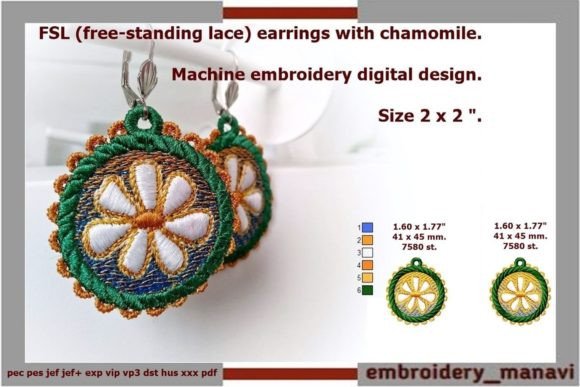
When I first opened the digital file for the ITH FSL Round Earrings with Chamomile, I immediately saw a design that balances delicate floral charm with genuine handcrafted appeal. The voluminous chamomile — or daisy, depending on how you interpret the petals — creates a soft, dimensional shape that feels both romantic and rustic. For a small business looking to add a thoughtful, nature-inspired accent to their merchandise, this embroidery design holds real potential. But as a professional embroidery designer, I never judge a design purely by its preview. I think about how it will stitch out on a cap, hold up as a branded patch, or sit on a canvas tote bag. This review is written from exactly that perspective: practical, business-focused, and built around the real needs of small shop owners, merch creators, and handmade brands.
Visual Personality and Brand Alignment
The immediate impression of the ITH FSL Round Earrings with Chamomile is one of softness, wellness, and approachable elegance. The round shape and the layered petals give it a friendly, almost vintage feel. It’s not corporate or aggressive; it’s decorative and warm. This makes it an excellent candidate for brands that want to communicate natural goodness, artisanal care, or botanical inspiration. Think of a small florist, a bakery that uses edible flowers, a handmade soap studio, a pet boutique with a gentle aesthetic, or a wellness brand selling herbal teas. The chamomile motif is universally recognized as soothing, so it instantly aligns with products that promise comfort, quality, and a personal touch.
In terms of embroidery style, the freestanding lace (FSL) nature of the design raises the bar. Because it’s an in-the-hoop project originally intended for jewelry, it has a finished, dimensional look that feels more premium than a standard flat embroidery. When repurposed for business use, this dimensionality can become a signature element. A small chamomile patch on a linen apron, a delicate accent on a tote bag, or a subtle detail on a sleeve cuff – all of these applications benefit from the tactile, high-end feel that FSL brings. However, the very thing that makes it beautiful also demands careful consideration during production, especially when you’re moving away from jewelry and onto apparel or accessories.
Business Applications Beyond Jewelry
While the design was originally created as a pendant and earring set, the true value for a small business lies in its adaptability. The ITH FSL Round Earrings with Chamomile can easily be transformed into a standalone embroidered patch, a chest logo accent, a decorative element on a cap side, or a branded add-on for product packaging. I’ve seen similar botanical motifs used on café staff aprons, on the back of denim jackets for a boutique’s staff uniform, or even as a small label stitched onto a handmade product. The round format naturally fits the shape of a patch, and because the design is digitized for FSL, it can be stitched directly onto water-soluble stabilizer and then applied as a finished piece – perfect for creating a consistent, professional patch that can be sewn or ironed onto almost any item.
For those selling on Etsy or at craft markets, this design can become a recognizable brand symbol. Imagine a set of organic cotton tote bags with a single chamomile patch in the corner, or a canvas apron with the design repeated subtly along the pocket edge. The design’s relatively small scale (based on its earring origin) makes it ideal for discreet branding, the kind that doesn’t scream for attention but quietly elevates the perceived value of the finished product. And because it’s a digital embroidery file, you can easily scale production without losing consistency, as long as you’ve ironed out the technical details first.
Placement and Production Considerations
Now, as a designer, I always look at the challenges. Not every design works everywhere, and the ITH FSL Round Earrings with Chamomile requires specific handling to avoid disappointment. First, size matters. If you try to shrink it down too far for a tiny cap front or a small label, the petal details may close up, and the voluminous effect could turn into a dense, puckered mess. Always test the design at the exact size you intend to use, and check the stitch density. An FSL design typically has a higher stitch count to achieve that lace-like structure, which can be heavy on lightweight fabrics. On thin cotton tee shirts or delicate blends, you’ll need a very good cutaway stabilizer and possibly a topper to prevent the stitches from sinking in.
Curved surfaces are another point of caution. A cap front demands a design that bends with the curve, and a perfectly round, flat patch may not conform nicely without distortion. For caps, I’d recommend using the design as a side detail rather than a centered front piece. Dark uniforms pose a contrast challenge: the chamomile’s subtle shading might get lost on black or navy unless you deliberately choose thread colors that pop. And as beautiful as the FSL texture is, it can catch on textured fabrics like burlap or heavily brushed canvas, so test on your actual material before committing to a bulk order.
Also, remember that this is an in-the-hoop project. That means the original digitizing assumes you’ll be stitching it in a hoop with specific stabilizer and backing. When you convert it to a patch or direct garment embroidery, you may need to adjust the sequence, add a tack-down stitch, or even re-digitize the file for a more robust application. Always check the file details provided by the digitizer; since the product description doesn’t specify stitch count, hoop size, or exact format, I strongly advise you to confirm these before production. A quick email to the designer or a thorough test stitch-out can save you hours of frustration.
Branding Impact and Customer Perception
From a brand identity perspective, the ITH FSL Round Earrings with Chamomile has the power to shift how customers perceive your business. Handmade products thrive on storytelling, and the chamomile flower carries a narrative of calm, care, and natural beauty. When a customer sees that same motif embroidered on your merchandise – whether it’s a patch on a cap, a detail on a tote bag, or an accent on your packaging – it creates a subconscious connection. They associate your brand with the qualities of the flower itself. This is emotional branding, and it’s incredibly effective for small businesses that rely on personal connection and customer loyalty.
In a crowded market, small details matter. A bakery that stitches a tiny chamomile embroidery on its staff aprons immediately stands out from the one with plain black uniforms. A florist who adds the same design to their reusable tote bags gives customers a walking advertisement that feels like a piece of art, not a loud logo. The dimensional, freestanding lace aspect adds a tactile luxury that flat embroidery often lacks, and that can translate into higher perceived value. For Etsy sellers, this design can be used to create cohesive product mockups that look professional and inviting, helping to increase buyer engagement and trust.
Designer’s Practical Checklist Before Business Use
Years of experience have taught me that the best embroidery designs still need a solid testing protocol. Here’s a step-by-step checklist I use before integrating any design, including the ITH FSL Round Earrings with Chamomile, into a business product line:
- Test in black and white first. Stitch the design using only black thread on white fabric, or vice versa. This reveals the true contrast and balance of the digitizing without color distractions.
- Check stitch density and underlay. An FSL design can be dense; make sure the fabric and stabilizer can handle it. If you see puckering, consider a heavier stabilizer or a less aggressive stitch angle.
- Verify thread color compatibility. Match the chamomile’s shades to your brand palette. The subtle yellows, whites, and greens need to harmonize with your existing visual identity.
- Test at the smallest intended size. What looks good at 50mm might fall apart at 30mm. Run a range of sizes to find the smallest reliable version for patches or labels.
- Confirm hoop size and file format. Since the listing doesn’t detail these, double-check that the file works with your machine and that you have the right hoop. FSL often requires a specific hoop for the water-soluble stabilizer.
- Use the correct stabilizer for the final fabric. For direct embroidery on a tote bag, a sturdy cutaway is often best. For a standalone patch, a water-soluble mesh method works well. Always match the technique to the end use.
- Create a printable mockup for client approval. Even if it’s your own brand, a mockup on a photo of the actual product helps you visualize the placement and scale. It’s a crucial step for brand consistency.
- Compare the design beside other design assets. Does it feel cohesive with your logo, other patches, or packaging graphics? The chamomile should look like it belongs, not like an afterthought.
- Confirm commercial licensing. Always check the digitizer’s terms. The product description doesn’t explicitly state whether commercial use on merchandise is allowed, so reach out and get written permission before selling items with this design.
Final Thoughts on the Design’s Commercial Potential
The ITH FSL Round Earrings with Chamomile is far more than a pretty jewelry piece. With the right approach, it becomes a versatile, brand-building asset for small businesses in the handmade, artisanal, and boutique space. Its inherent charm, combined with the dimensional quality of freestanding lace, gives products a quiet sophistication that customers notice and remember. From apron embroidery to cap embroidery, from tote bag design to custom embroidered patches, this design offers a unique way to infuse your merchandise with a signature botanical touch. As a professional embroidery designer, I’d recommend it to any business owner who wants to add a layer of warmth and authenticity to their branded products. Just remember: test thoroughly, respect the technical demands of the digitizing, and always keep your audience’s experience in mind. When used thoughtfully, this chamomile design can become a small but powerful element of your brand’s visual story.