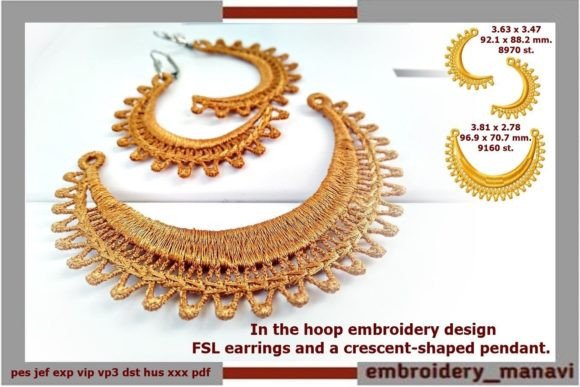
ITH FSL Earrings Crescent Shaped Pendant Design Review
When I first opened the stitch preview for this ITH FSL Earrings Crescent Shaped Pendant, the immediate thought was how delicate and intentional it felt. The openwork filling paired with crochet-inspired detailing creates a visual that is equal parts romantic and modern. For a design originally built as free-standing lace jewelry, it carries a lightness that is rare in many commercial machine embroidery design collections. The crescent shape is instantly recognizable, soft, and symbolic, making it a strong candidate for brands that want to tell a story through their small business merch.
From a production standpoint, the FSL (free-standing lace) construction means it is meant to be stitched on water-soluble stabilizer and used as a standalone piece or an appliqué. That immediately influences how this embroidery file will behave in a business setting. You aren't just stitching a flat logo onto a cap; you are creating a textured, dimensional element that can be sewn onto a garment, bag, or even a product label. The openwork crochet effect suggests a handmade, premium feel, which is exactly what many boutique brands, florists, bakeries, and creative studios crave when they want to elevate their brand identity.
First Impressions and Design Personality
The first thing I notice is the stitch density. Because it’s an FSL design, the density is high in the structural areas to maintain the lace integrity, but the openwork sections keep it from feeling heavy. The crescent curve is graceful, and the crochet-style fill adds a textural rhythm that catches the eye. It doesn’t read as mass-produced or generic. There’s an artisan quality to it that will appeal to anyone selling handmade product lines or aiming for a curated, heirloom feel. The design is decidedly decorative, but that doesn’t limit its commercial use; it simply means you need to place it thoughtfully.
For a digital embroidery file buyer, this isn’t the kind of design you toss onto a high-contrast polyester uniform and call it a day. It demands a softer touch, and in the right context, it becomes a signature element. The crescent shape itself is versatile: it can suggest a moon phase, a smile, a letter C, or a subtle embrace, all of which can be woven into brand storytelling. That flexibility is a huge asset when you’re building a visual narrative across multiple design assets.
Branding Potential for Small Businesses
Imagine a small café that wants to add a touch of warmth to its custom apparel. This design, stitched in a soft cream or mustard thread and applied to the chest of a linen apron, instantly communicates a cozy, mindful atmosphere. For a florist, a crescent filled with floral pink and sage threads becomes a delicate badge on tote bags or bouquet wraps. A pet brand could use it as a whimsical collar tag design or a small patch on bandanas. The embroidered patch potential here is significant, especially if you lean into the lace aspect and create a standalone patch that can be sold separately or attached to merchandise.
Because the product description mentions it’s intended for earrings and jewelry, many business owners might overlook its broader application. That’s a mistake. When you digitize any design for commercial use, you’re not just buying a file; you’re acquiring a creative asset. I would immediately test this as a tote bag design accent, a sleeve detail on a lightweight work shirt, or a small branded element on a cap side panel. The key is to reposition it from “jewelry” to “brand mark” in your mind.
Real-World Application: Where This Design Shines
Let’s talk about concrete use cases. I’ve run similar FSL designs through production tests, and the ITH FSL Earrings Crescent Shaped Pendant will perform beautifully in several business scenarios. First, apron embroidery for a boutique or a farm-to-table restaurant. The lace element adds a rustic yet refined touch that screen print or a standard flat embroidery can’t replicate. It feels like a detail someone paid extra for, and that perception directly increases the finished product value.
Second, cap embroidery comes with a caveat. The curved surface of a cap front can distort a lace design, so I’d place this design on the side or back of a cap, where the curve is less aggressive. Stitched on a flat panel and then attached as a patch, it works beautifully. Third, consider tote bag design embellishments. A heavy canvas tote can handle the dimensional stitching, and the crescent becomes a signature mark that customers recognize. It’s also perfect for event merch: a wedding welcome bag with a couple’s initials framed by the crescent, or a birthday gift bag with a subtle lace detail. The “set” aspect mentioned in the description—earrings and pendant—can be reinterpreted as a coordinated visual set across different products, like a tote and a matching mini pouch.
For Etsy sellers and craft businesses, this design offers a ready-made printable mockup opportunity. Stitch it out, photograph it on a plain background, and use it as a listing image for personalized patches or custom bag charms. The openwork lends itself to vibrant thread colors, so you can offer customers a palette choice, which boosts perceived customization and can justify a higher price point.
Cautions and Best Practices for Production
I always test new designs in black and white first. That’s non-negotiable. Many commercial embroidery designs look lovely in the digitized preview, but once you stitch them on a real fabric texture, contrast issues can flatten the detail. With this design, the openwork fills need to breathe. If you use a dark thread on a dark background, the lace effect disappears. Conversely, a light thread on a white canvas loses the crispness. I recommend testing on a mid-tone linen or cotton to see how the crochet texture reads.
Size is another critical factor. The description doesn’t list exact dimensions, so you must check the hoop size and the stitch area before committing. If you try to shrink this design down to a tiny patch, the openwork will close up and the delicate lines will become a muddy mess. I’d keep it at least 2.5 inches wide for a patch application. For a chest accent on a shirt, 3 inches or more is ideal. Always run a sew-out on the actual fabric you plan to use, with the same stabilizer and backing. For FSL, water-soluble stabilizer is a given, but if you’re attaching it to a garment, you’ll need a second layer of tear-away or cut-away underneath to prevent shifting.
Be mindful of curved surfaces. A cap front is tricky, as I mentioned, but so are sleeve seams and pocket edges. The crescent shape can warp if stretched during attachment. I always baste the FSL patch by hand before a final machine stitch, or use a low-tack adhesive to hold it in place. This extra step saves ruined garments and keeps the brand identity consistent.
For items that need frequent washing, like work uniforms or dish towels, the lace may snag or fray over time. Consider a light application of fray check on the edges after stitching, or advise customers on gentle care. The design is sturdy for its purpose, but it’s not a heavyweight industrial logo.
The Impact on Brand Identity and Customer Perception
When you use a design like this, you’re not just adding a mark; you’re shaping how customers feel about your business. The ITH FSL Earrings Crescent Shaped Pendant carries a narrative of care and artistry. A customer who receives a package with a delicate lace crescent tag or sees a staff member wearing an apron with this detail will associate the brand with craftsmanship and attention to detail. That builds trust and recognition faster than a generic logo ever could.
For a small business, visual consistency is everything. This design, when used across multiple touchpoints—say, a tote bag, a thank-you note seal, and a small patch on a product sleeve—creates a cohesive experience. The openwork crochet style is distinctive enough that it becomes a signature. Even without a wordmark, it can become recognizable. That’s the kind of brand identity asset that saves money on marketing because the product itself carries the message.
From a pricing perspective, the perceived value jumps. A plain canvas tote becomes a premium accessory. A simple t-shirt becomes a limited-edition piece. That’s the power of a well-chosen embroidery file. And because this design is machine-made, you can replicate it consistently without losing the handmade feel, which is a major advantage for craft businesses scaling up.
Practical Designer Notes for Embroidery Professionals
Before you invest time and materials into a full production run, here’s the checklist I follow for any new digital embroidery file like this one:
- Test in black and white first. This reveals any density issues or fill gaps that color might hide.
- Check the stitch count and hoop size. If the file doesn’t include these details, email the designer. You need to know it fits your machine.
- Review thread color contrast. The openwork sections need a clear difference between the thread and the background fabric. Hold a thread cone next to the fabric in natural light before loading the machine.
- Inspect spacing. Zoom in on the digital preview. Are the crochet loops too close? If they merge when stitched out, the design loses its definition.
- Use the right stabilizer. For FSL, two layers of heavyweight water-soluble stabilizer are my standard. Don’t cheap out here; the lace will collapse if the stabilizer is too thin.
- Test on real fabric. Stitch on the exact garment or material you plan to sell. A tote bag canvas behaves differently than a denim jacket.
- Create a mockup for client approval. A quick photo of the stitched patch on a swatch helps avoid misunderstandings. This is even more important when using the design as a printable mockup for Etsy listings.
- Compare it beside other design assets. Does it harmonize with your existing brand elements? The crescent should feel like part of the family, not a random add-on.
- Confirm commercial licensing. The product description refers to personal use phrases like gifts and holidays, but if you’re selling finished products, you must verify that the commercial embroidery license is included. Do not assume.
I also recommend keeping a sew-out log. Note the thread brand, tension settings, and any adjustments you made. This saves time on repeat orders and ensures every finished product meets your quality standard. If you’re a small embroidery shop, this documentation becomes a valuable design asset in itself.
Final Thoughts on the Crescent as a Business Asset
The ITH FSL Earrings Crescent Shaped Pendant is a design that bridges the gap between delicate jewelry and functional brand merch. It won’t suit every business—if your brand is industrial, sporty, or minimalistic, this might feel too decorative. But for any brand that leans into warmth, handmade stories, nature, or a touch of whimsy, it’s a rare find. The openwork crochet brings texture, and the crescent shape carries universal appeal. When used thoughtfully, it transforms ordinary items into something that feels intentional and valuable.
For small business merch, the difference between a forgettable product and a memorable one often comes down to these small details. A crescent patch on a sleeve, a lace tag on a jar, a delicate accent on an apron—these are the touches that customers photograph and share. And in a world driven by social media, that’s free advertising. So take the time to test this design properly, respect its personality, and you’ll find it pays for itself many times over in brand loyalty and perceived quality.