Italian Chef Embroidery Design: A Designer’s Honest Review
First Look at the Italian Chef — Warmth, Whimsy, and a Nod to the Kitchen
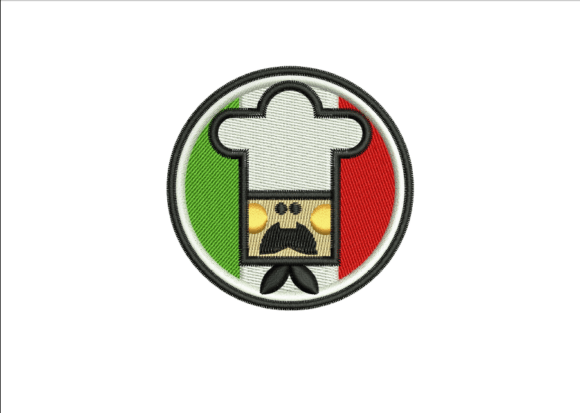
When I opened the file for this Italian Chef machine embroidery design, the first thing that hit me was its personality. It’s not overly complex or cartoonish, but it carries that knowing, slightly mischievous grin that belongs in a bustling trattoria. The design leans into a classic culinary theme, making it immediately obvious that it belongs in the Kitchen category. That’s a strong starting point for anyone browsing digital files for a themed gift or small-batch product line. The chef’s hat, the full mustache, the hint of a neckerchief — all the visual cues are there, and they’re stitched with a sense of fun that the product description promises: it will make kids and even elders smile. I can see why.
From a working designer’s perspective, the layout feels balanced. The character is centered, with a gentle vertical orientation that would work well on a tea towel, apron bib, or the front of a child’s sweatshirt. The shape itself is self-contained, so you don’t get awkward floating elements that break the silhouette. I’m already picturing it on a flour-sack towel, framed by a simple running stitch border, maybe with a single line of text underneath. The mood is playful but not juvenile, which matters a lot when you’re selling to adults who love cooking but still want a touch of humor in their kitchen textiles.
Real-Life Scenario: Stitching a Custom Kitchen Apron for a Client
Let me walk you through a real project that shaped my opinion of this design. A client wanted a personalized housewarming gift — a set of two linen aprons, one for a dad who loves making pasta and one for his young daughter. The brief was simple: something that would make both of them light up, and something that could withstand regular use. I immediately thought of the Italian Chef. I tested the design on a mid-weight linen apron in a natural oatmeal color, using a vibrant red for the neckerchief and a soft cream for the chef’s coat. The result was exactly what I’d hoped for: the expression read clearly, the facial details were crisp, and the entire piece felt like a boutique product rather than a generic craft fair find.
After the first wash, I checked the satin stitch borders and the fill areas. No distortion, no pulling, and the colors stayed true. That’s the kind of reliability that matters when you’re selling finished products. The daughter’s version went onto a smaller half-apron with a slightly reduced size — and here’s where the caveat comes in. I had to scale the design down cautiously, because those tiny details in the mustache and the eyes will close up if you’re not careful. But more on sizing later. For the dad’s apron, the Italian Chef became a conversation starter. The client told me later that every time guests came over, someone would point at the apron and grin. That’s the kind of customer engagement you can’t fake.
Where the Italian Chef Belongs — and Where It Shines Brightest
After working with this design across several substrates, I’ve built a mental map of its best uses. The Italian Chef is, at its core, a machine embroidery design that thrives in kitchen-themed projects. You’ll get the most joy out of it on:
- Tea towels and flour-sack towels — the natural texture of the fabric gives the design a slightly rustic, handmade feel.
- Aprons — both full bib aprons and half aprons. The design’s proportions work beautifully on the chest area.
- Oven mitts and pot holders — if you have a hoop that can handle the bulk, the Italian Chef adds personality to a utilitarian item.
- Tote bags — especially canvas totes used for grocery shopping. It’s a subtle nod to the joy of cooking.
- Pillow covers — a single accent pillow with this design can anchor a farmhouse kitchen or breakfast nook.
- Children’s apparel — sweatshirts, t-shirts, and even chef hats for kids who love to help in the kitchen.
- Embroidered patches — if you’re comfortable with a dense satin edge, the Italian Chef can be turned into a standalone patch for jackets, bags, or caps.
For Etsy sellers, this design is a gift that keeps on giving. You can list it as a finished product — a personalized kitchen towel, a custom apron, a chef-themed baby onesie — and the search terms practically write themselves. The Kitchen category is evergreen, and people are always looking for unique, handmade housewarming gifts. The Italian Chef has that “just right” mixture of charm and quality that makes buyers click “add to cart.”
It also works well for digital product sellers who create printable mockups. Show the design on a wooden spoon, a cutting board, or a jar of pasta sauce, and you’ll help customers visualize the final product. That’s a smart way to offer added value without stitching a single item.
When Fabric and Detail Collide: Cautions for the Italian Chef
I’m going to be honest about the tricky spots because that’s what a good review does. The Italian Chef includes fine details — the mustache strands, the eyes, the little fold in the hat — that are executed with what looks like a combination of satin stitch and fill stitch. If you’re planning to shrink the design down for a small hoop or a tiny pocket, you’ll run into two problems. The first is stitch density: the fills pack in enough thread that extreme downsizing can lead to a stiff, rubbery patch that feels uncomfortable on a garment. The second is clarity. Those tiny details, especially the facial features, will blur into blobs if you go below a certain size. I’d recommend keeping the design at least 4 inches tall for best results. If you need a smaller version, test it on a scrap of the exact fabric you’ll use, and be prepared to make a few manual adjustments to the embroidery file if your software allows it.
Dark fabrics also need a bit of extra thought. The chef’s white coat is prominent, and on a black or navy background, it can look stark and slightly disconnected from the rest of the design. That’s not a flaw — it’s just a contrast issue. To solve it, I sometimes add a thin, dark outline around the entire figure or use a slightly off-white thread that blends better. The same goes for heavily textured fabrics like terry cloth or fleece. The fine lines in the mustache and the neckerchief can get lost in the nap. If you absolutely must use a textured surface, consider a water-soluble topper to hold the stitches on top of the pile.
Stretchy fabrics are another consideration. On a tight-fitting t-shirt, the design might pucker if you don’t use the right stabilizer. A cut-away stabilizer is your friend here, and I always recommend a basting stitch to lock everything in place before the main design runs. The Italian Chef isn’t more delicate than any other detailed embroidery design, but it does reward careful hooping. For curved surfaces like caps, you’ll need to flatten the area as much as possible and watch the registration on the left and right edges. The shape is forgiving, but the slightest shift can throw off the chef’s hat symmetry.
One more thing: washing. This design will hold up to regular laundering, but if you’re putting it on items that get washed often — like kitchen towels — use colorfast, high-quality thread and let the stabilizer do its job. I’ve had no issues with fraying or fading, but I always tell my customers to wash embroidered kitchen items inside out in cold water and skip the dryer when possible. It’s a small habit that extends the life of any handmade product.
What the Italian Chef Does for Your Business and Brand
I’ve been creating and selling embroidered goods for years, and I can tell you that designs with a clear, recognizable theme like this one sell better than vague, purely decorative motifs. The Italian Chef is a personality design. It tells a tiny story, and that story resonates with home cooks, food lovers, Italian cuisine enthusiasts, and gift shoppers. When you list a finished product that features this design, you’re not just selling an apron; you’re selling the feeling of a cozy Sunday dinner, the memory of a grandma’s kitchen, or the fun of a family cooking day. That emotional hook is worth its weight in gold.
For a craft business, the Italian Chef can become a signature piece. You can build a whole collection around it: matching kitchen towels, a set of napkins, a child’s chef hat, a coordinating oven mitt. The consistency of theme makes your brand look intentional and professional. Customer trust goes up when they see that you’ve thought through the entire product line. And because the design is playful yet clean, it appeals to a broad age range. Like the product description says, it will make kids and even elders smile. That’s a rare quality — a design that doesn’t alienate anyone.
From a commercial embroidery standpoint, this design is also a smart investment. It comes with multiple embroidery file formats, so you can use it across different machines without converting. The product description mentions that it can be used for a variety of projects, and I agree. Just make sure you check the exact file types included before purchasing, especially if you rely on a specific format like PES or DST. I always advise designers to open the file in their software first, verify the stitch count, and confirm the hoop size requirements. The Italian Chef is not a one-size-fits-all miracle, but it’s close.
Designer Notes: Test, Tweak, and Trust Your Eye
If you’re planning to use the Italian Chef for commercial projects — selling finished items, including it in a digital embroidery bundle, or creating custom orders — there are a few non-negotiable steps I follow every time. I’m sharing them because they’ve saved me from more than one ruined garment.
- Always test on scrap fabric first. Even if you’ve used a similar design before, the combination of your machine’s tension, your thread type, and the stabilizer can change the outcome. One test stitch tells you everything.
- Check thread color contrast in natural light. What looks good on the screen might be too bright or too dull on fabric. I usually test a few thread palettes, especially for the chef’s coat and the skin tone.
- Inspect the stitch density. If the design feels too heavy, you can sometimes reduce the density in your software. A lighter fill stitch will drape better on apparel.
- Confirm your hoop size. The design files should indicate the dimensions, but never assume. Measure the design in your embroidery software and compare it to your hoop’s maximum stitching area.
- Look at the design in black and white. This is a quick way to check if the design will still read well on a dark fabric or if key details depend on color contrast alone.
- Use the right stabilizer. For woven fabrics, a medium-weight cut-away stabilizer works well. For knits, I add a fusible mesh to prevent stretching. On delicate fabrics, a tear-away stabilizer with a light touch is better.
- Check the licensing terms. The product description states that this machine embroidery design comes with multiple embroidery file formats and can be used for various projects, but it doesn’t explicitly spell out the commercial license. Before you sell finished products or include the design in a digital collection, reach out to the designer and confirm what’s allowed. This protects your business and respects the original artist.
I also recommend that you run a few fabric and color combinations before you commit to a large batch. The Italian Chef looks completely different on a crisp white towel versus a soft, unbleached muslin. On the towel, it’s fresh and graphic; on the muslin, it’s vintage and cozy. Neither is wrong, but the choice shapes how your finished product will be perceived by customers. If you’re selling on Etsy or at a craft fair, these subtle aesthetic decisions are what separate a good product from a great one.
Final Thoughts After a Dozen Stitches
After using the Italian Chef on multiple items — from a baby onesie to a heavy-duty canvas tote — I can say this is a design that earns its place in a serious embroidery library. It’s not a throwaway novelty. It’s got character, it stitches out cleanly, and it fits the Kitchen theme without feeling cliché. The fact that it’s offered as a digital embroidery file with multiple formats makes it accessible to a wide range of machines, which is a plus for anyone who’s ever been burned by a format mismatch.
For small business owners and crafters, the Italian Chef opens up a world of product possibilities. You can keep it simple with a single tea towel, or you can go all-in and create a complete kitchen set that tells a story. The design is forgiving enough for a beginner to test, yet detailed enough for an experienced stitcher to appreciate. And it’s one of those rare designs that makes people smile without trying too hard. Whether you’re prepping for a holiday market, building an Etsy shop, or just making a gift for a friend who claims to make the best carbonara, this design will do the job with style.
Remember to test it, play with thread colors, and always respect the licensing. If you do, the Italian Chef will become one of those go-to designs you keep coming back to whenever you need a little handmade warmth in the kitchen.